Product
Pricing
Case Study
Contact
CASE STUDY
AOX-DRIVEN PERFORMANCE
2026. 04. 20
AOX-Driven Front Optimization for the Porsche 992 GT3
Validating AI-powered aerodynamic design through simulation and track testing
Introduction
Increasing aerodynamic efficiency under tighter development timelines challenges traditional workflows relying on manual Computational Fluid Dynamics (CFD) iterations and physical testing. To address this, ADRO developed Aerodynamic Optimization Experience (AOX), an AI-powered software that combines intelligent shape evolution with multi-fidelity simulation to accelerate aerodynamic design.
This case study presents AOX’s application to the Porsche 992 GT3 front splitter and intake panel, validating AOX’s capability to rapidly generate and optimize aero parts while preserving OEM design intent and delivering measurable performance gains.
Project Objective
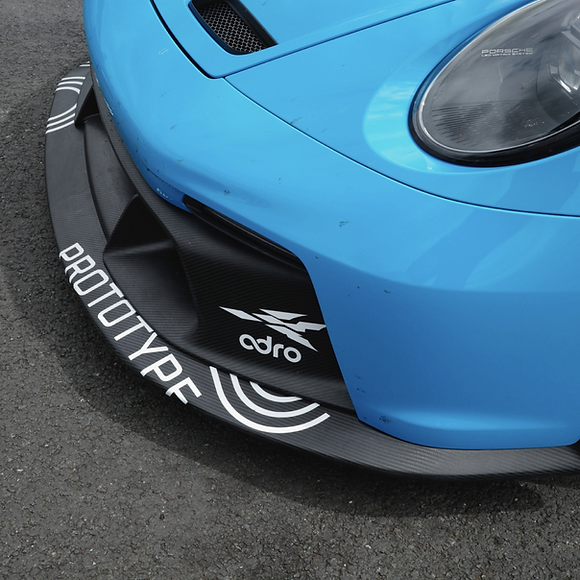
The Porsche 992 GT3’s factory high-downforce setup is known for balanced, stable aerodynamic performance. After installing the ADRO V1 body kit, analysis revealed further potential to increase front downforce within existing packaging constraints. While the V1 kit provided the option to add substantial rear downforce via the wing and diffuser, increasing front downforce was key to unlocking the full potential of the rear aero package whilst maintaining the all important balance of the vehicle.
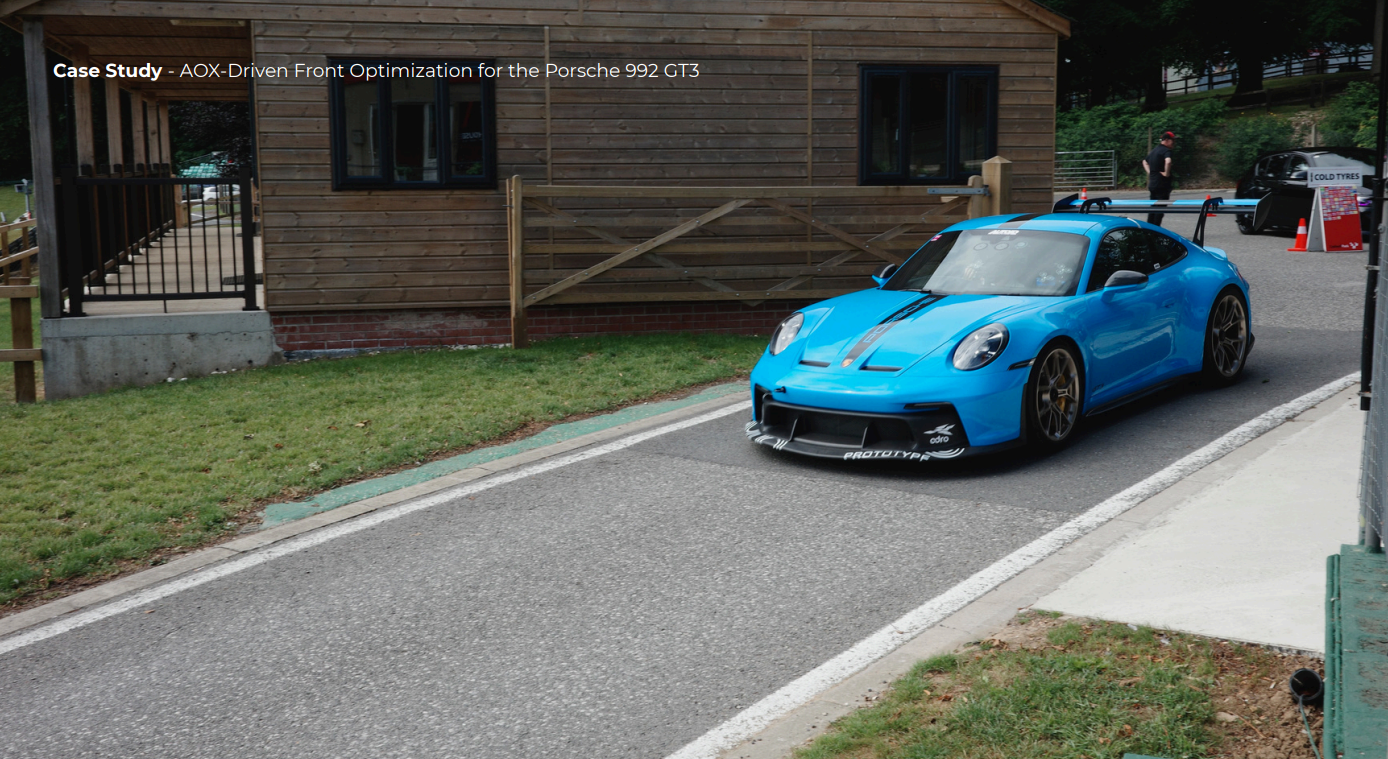
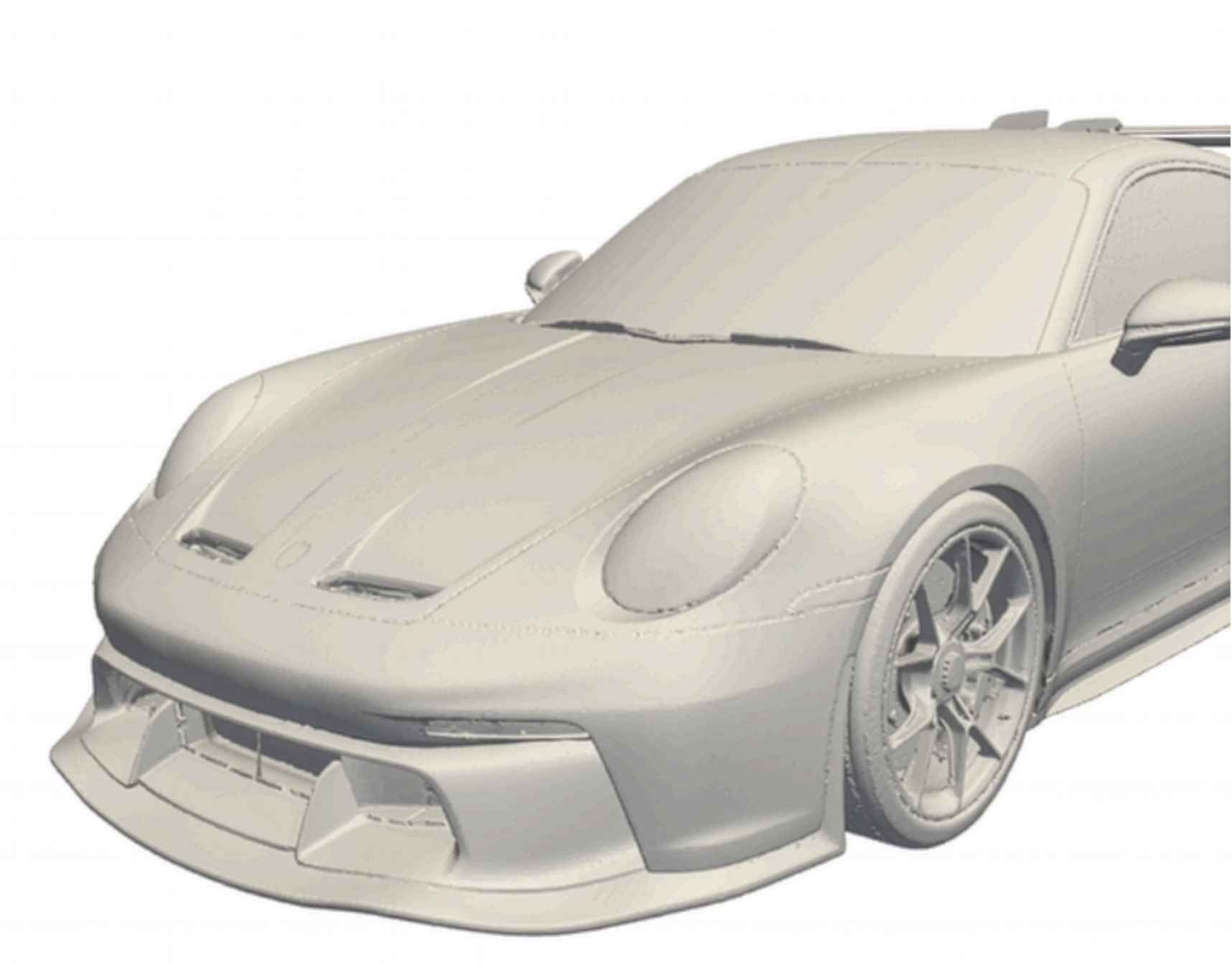
This phase focused on integrating two new AOX-designed components, a front intake panel and front splitter, alongside existing ADRO V1 aero parts, including side skirts, rear apron, rear diffuser, and the AT-P rear wing.
The primary aerodynamic goal was to increase front downforce to enhance mechanical grip and steering precision while adding minimal drag.
The AOX Approach
Traditional aerodynamic development often involves lengthy, manual iteration cycles, relying heavily on engineering experience, physical prototypes, and wind tunnel testing, processes that can take weeks or months with no guaranteed progress. AOX uses evolutionary algorithms to generate parameterized shape variants, evaluated by progressively higher-fidelity CFD runs.
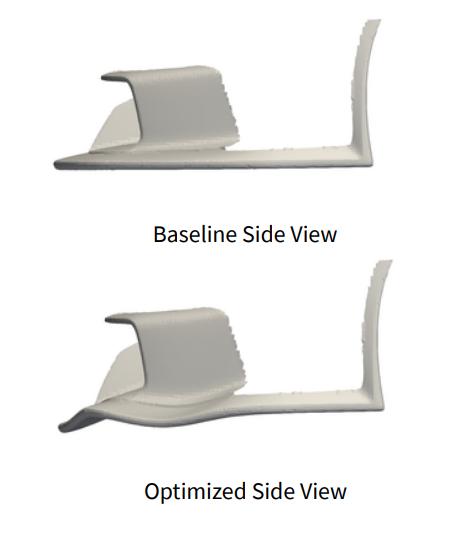
For the GT3 project, AOX evaluated around 10 splitter design iterations, refining shapes through a combination of low and high-fidelity simulations. The optimization was completed within a single day.
This contrasts with the ADRO V1 front splitter, developed through a traditional trial-and-error approach involving approximately 35 CFD simulations for the complete body kit, along with extensive fine-tuning to maintain the optimal aerodynamic balance.
“AOX compressed what normally takes weeks of manual CFD iteration into a single day, allowing systematic exploration of shape variations that would be impractical manually.”
While aerodynamic challenges were manageable, a key design constraint was maintaining a cohesive visual language consistent with Porsche’s original design intent. Unlike more radical AOX applications, such as the Tesla Model Y rear bumper, the GT3 splitter and intake panel prioritized performance improvements without deviating from brand identity. Radical or unconventional shapes were intentionally limited to respect styling and market acceptance.
THE AOX Approach
Unlike conventional CFD-driven workflows, this project relied exclusively on AOX for aerodynamic development.
AOX workflow enabled:
- Rapid exploration of multiple aero configurations
- Automate evaluation of downforce, drag, and balance
- Iterative refinement without manual meshing or solver tuning
- Seamless transition from numerical analysis to physical validation
Each configuration as optimised and validated in sequence:
- Stock configuration
- Initial ADRO aero setup
- AOX-optimised front aero
- AOX-optimised front + rear aero (full package)
This stepwise approach allowed performance gains to be attributed and explained, rather than observed as a single aggregated result.
Performance Gains
Downforce, Drag and Balance
AOX optimisation resulted in a substantial increase in total downforce across configurations, accompanied by a predictable increase in drag.
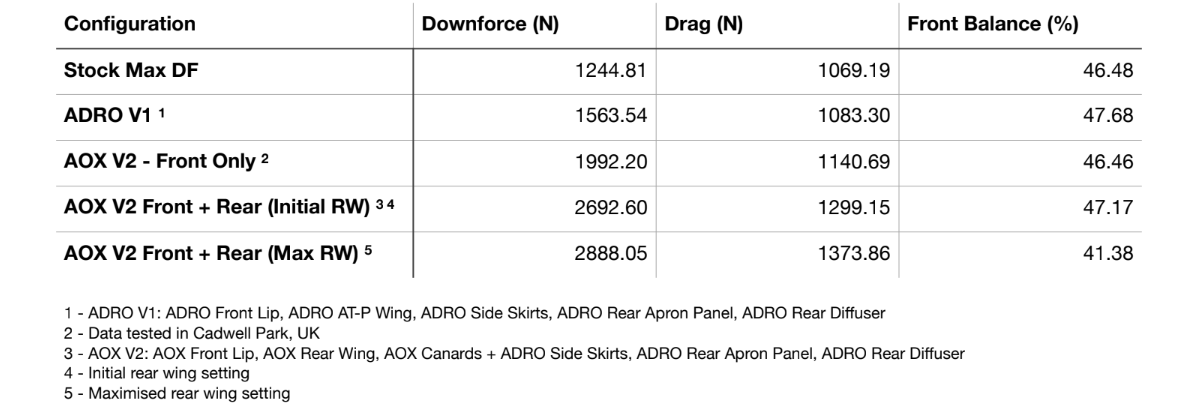
Key observations:
- Downforce increased progressively with each AOX-optimised step.
- Balance shifted rearward as rear aero contribution increased.
- Results highlight the importance of balance management, not just peak load.
Downforce gain:
Compared to the stock configuration, AOX V2 Front + Rear (Max RW) delivered a substantial increase in aerodynamic load, with total downforce rising by approximately 132%. When compared against ADRO V1, the downforce gain remained significant at roughly 85%, demonstrating that AOX optimization scales effectively from partial aero upgrades to a full aero package. This progressive increase confirms that the additional load was not achieved through isolated component tuning, but through system-level aerodynamic interaction between front and rear devices.
Drag impact and control:
While downforce increased dramatically, drag growth was kept relatively moderate. Relative to the stock setup, drag increased by about 28%, and by roughly 27% compared to ADRO V1. Given the magnitude of downforce gain, this indicates that AOX did not simply trade straight-line efficiency for cornering performance. Instead, the optimization process focused on controlling drag growth, ensuring that the performance gains remained usable on track rather than being offset by excessive straight-line penalties.
Aerodynamic efficiency:
As a result, the overall aerodynamic efficiency improved markedly. The downforce-to-drag ratio increased by approximately 81% compared to stock and 46% compared to ADRO V1. This improvement highlights that AOX optimization delivered more effective aerodynamic load per unit of drag, translating numerical gains into practical on-track benefits. Such efficiency gains are particularly important in circuit environments where both straight-line speed and high-speed cornering performance must coexist.
Front Balance interpretation:
With the full aero package and maximum rear wing configuration, front balance shifted to approximately 41% front, compared to 46–48% in the stock and ADRO V1 setups. This rearward shift reflects a deliberate emphasis on rear stability and high-speed confidence, consistent with a maximum rear wing configuration. At the same time, it underlines the importance of balance management when scaling aerodynamic performance, as full aero optimization introduces new tuning opportunities—and requirements—across front devices and rear wing settings to achieve the desired handling characteristics.
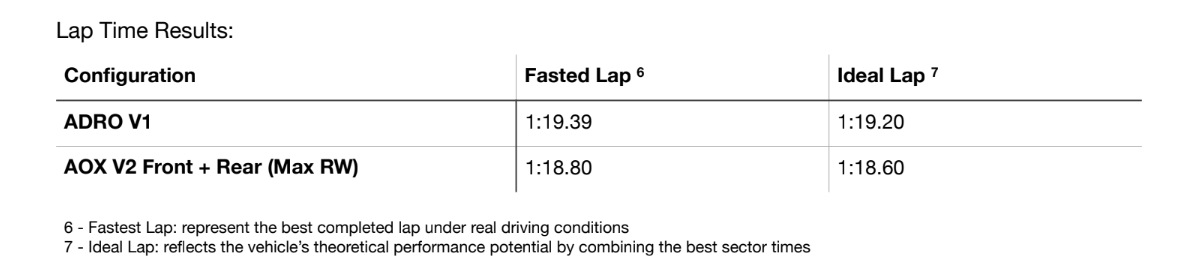
Performance Gain:
- Fastest lap improvement: -0.59 s
- Ideal lap improvement: -0.60 s
These results demonstrate that the aerodynamic gains translated directly into lap time reduction, even without traditional CFD validating process and tuned power unit.
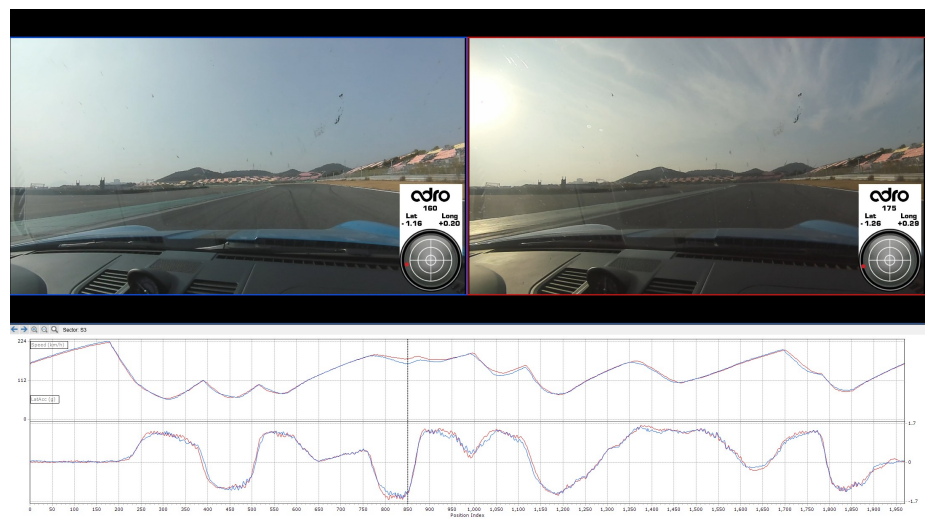
Full lap data
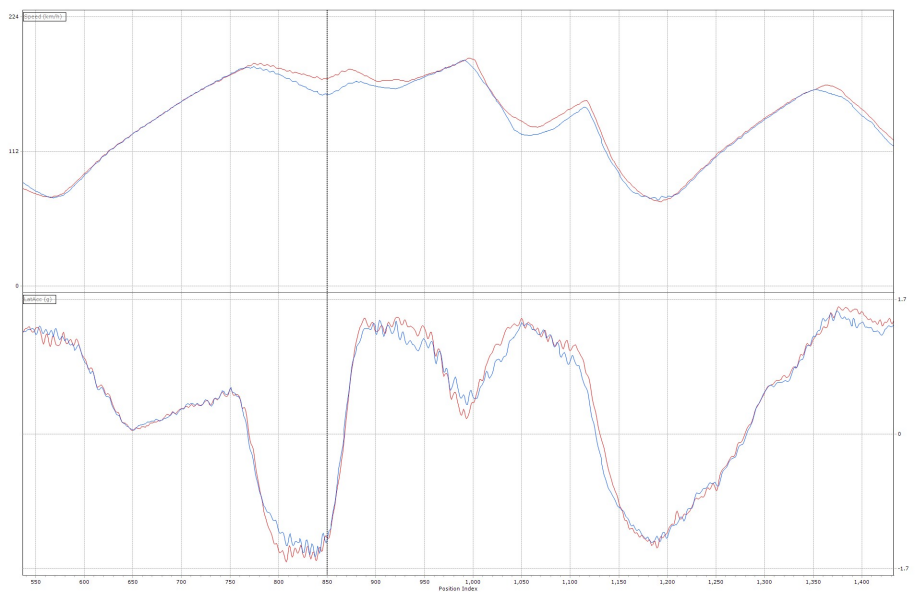
High speed cornering
Where the Time Was Gained
High-Speed Corners & Full Lap Analysis
VBOX overlays revealed that performance gains were concentrated in high-speed sections, where aerodynamic load and stability play a dominant role.
Key findings:
- Higher sustained cornering speeds in fast corners
- Improved lateral acceleration consistency
- Increased driver confidence during high-speed direction changes
Full-lap overlays show that gains were achieved not through aggressive braking or traction differences but through aero-driven stability and speed retention.
What This Case Study Demonstrates
AOX scales effectively from single-component optimisation to comprehensive aero packages. AOX-only workflows can deliver track-validated performance gains and stepwise validation allows engineers to understand the reasons behind performance improvements rather than just the magnitude. Aerodynamic optimisation is most effective when viewed as a system-level balance problem.
Conclusion
This YeongAm Circuit case study confirms that AOX is capable of delivering meaningful aerodynamic performance improvements without reliance on traditional CFD pipelines.
By combining automated optimisation with structured on-track validation, AOX enables faster, cleaner, and more scalable aerodynamic development — from concept to track.